
I spent nine years sitting in a claims department and supporting underwriters. I’ve seen the aftermath of thousands of incidents, and let me tell you something: when the police arrive at a collision, they don’t care about your intentions, your pain relief regimen, or your good mood. They care about the Road Traffic Act.
I hear this question constantly on forums and in the pub: “I have a legal prescription for medical cannabis, so I’m fine to drive, right?”
If you take that attitude to a roadside drug wipe, you’re going to have a very bad night. Let’s cut through the myths and look at the hard, unforgiving reality of prescribed cannabis driving UK laws, the Section 5A limits, and why your medical defence is a courtroom tool, not a “get out of jail free” card.
The Legal Landscape: Understanding Section 5A
Before 2015, the police had to prove you were “impaired” to prosecute you for drug driving. They needed a Field Impairment Test (FIT) and a keen officer to articulate your wobbliness. Then came the “drug-driving” amendments to the Road Traffic Act 1988, specifically Section 5A.
This changed everything. Section 5A introduced a “no-fault” threshold for specified controlled drugs. It doesn’t matter if you feel fine, if you’ve driven that route a thousand times, or if you aren’t “high.” If your blood THC level exceeds the limit prescribed by the statute, you have committed an offence.
The limit for THC (the psychoactive component in cannabis) is set at 2 micrograms per litre of blood. For context, that is essentially zero. It is a detection threshold, not a safety threshold. It is set so low that for a recreational user, it’s inevitable you’ll be over it. For a patient using prescribed cannabis, the situation is legally complex and, frankly, fraught with risk.
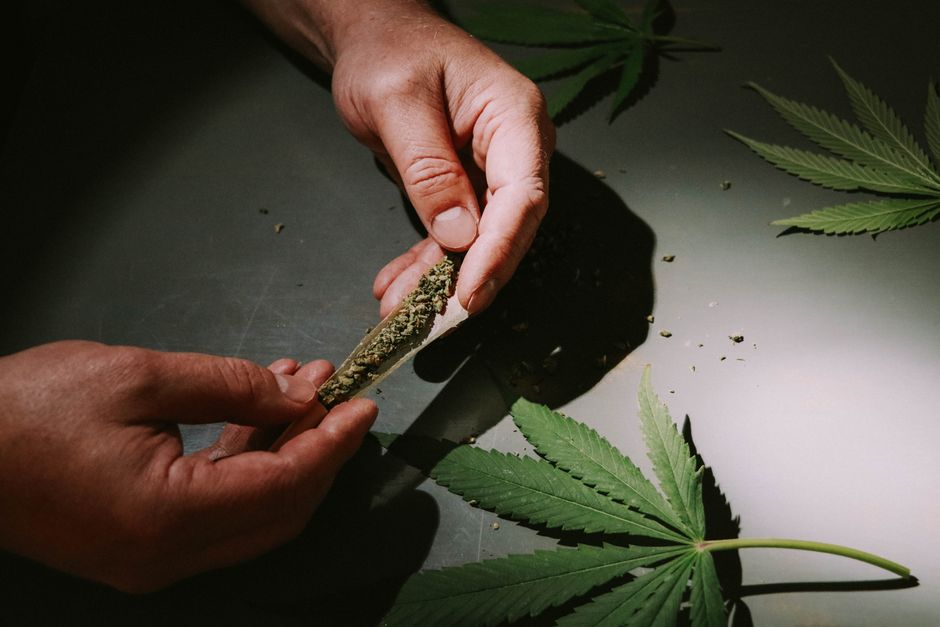
Presence vs. Impairment: Why the distinction matters
In the eyes of the law, there is a massive chasm between “having a drug in your system” and “being impaired.”
- Presence: This is a strict liability offence. You have the substance in your blood above the statutory limit? You are guilty under Section 5A. The police officer doesn’t need to prove you were driving erratically; they just need the blood test results.
- Impairment: This falls under Section 4 of the Road Traffic Act. This is where the police claim you were “unfit to drive through drink or drugs.” This is harder to prove, but it carries heavier penalties and usually involves a crash or dangerous driving.
The “Medical Defence” for medical defence drug driving applies to the Section 5A (presence) offence. However, it does not apply to the Section 4 (impairment) offence. If you are driving whilst impaired, it doesn’t matter if the weed was prescribed by a doctor or bought from a shop; you are going down for the impairment.
The “Medical Defence” – A Courtroom Reality, Not a Roadside One
Many patients believe that showing a police officer their prescription tub makes them immune to arrest. That is a dangerous misconception. If you are stopped at the roadside and you provide a positive sample, the officer is almost certainly going to arrest you for the purpose of a blood test.

The “Medical Defence” is a statutory defence. This means it is something you present to a magistrate or a judge after you have been charged and are standing in a courtroom. You have to prove, on the balance of probabilities, that:
My advice? Don’t bank on this being easy. If you end up in court, you will need solicitors, expert witnesses, and the patience of a saint. As a former claims handler, I can tell you that insurance companies do not look kindly on drug-driving convictions. If you are convicted, your policy is void, your premiums will skyrocket (if you can get insured at all), and your personal liability coverage could be non-existent if you’re involved in an incident.
The Checklist: What you need to carry
If you are a patient, you need to be prepared. If you don’t follow a strict protocol, you are leaving your fate to the discretion of an officer who might have never handled a medical cannabis case before. Treat this like an insurance audit.
DVLA Fitness to Drive: The Silent Killer of Policies
Beyond the police, there is the DVLA fitness to drive aspect. Many people forget that they have a legal obligation to notify the DVLA of any condition that may affect their ability to drive safely. This isn’t just about the cannabis; it’s about the medical condition you are using the cannabis to treat.
If you don’t declare your condition, and you have an accident, your insurer will look for any reason to void your claim. “Failure to disclose a material fact” is the most common reason for a claim repudiation I’ve ever seen. If the DVLA has placed restrictions on your licence, and you ignore them, you aren’t just breaking traffic law—you are driving without a valid licence. Check your specific medical evpowered.co.uk guidelines on the gov.uk website. Don’t guess. Don’t trust a forum. Read the official guidance.
The Roadside Protocol: How to act
If you are pulled over, do not panic, but do not be casual. Here is my “claims-handler-turned-journalist” advice for the roadside:
- Be polite and professional: Don’t try to lecture the officer on the law. They are doing their job.
- Declare the prescription immediately: As soon as the officer mentions drugs or the test, state clearly: “I am a medical cannabis patient. I have my prescription documentation here.”
- Offer the documentation: Hand over your clinic letter and your labelled packaging. Do not be evasive.
- Accept the procedure: If they want to perform a blood test, let them. If you refuse the test, you will be prosecuted for “failing to provide a specimen,” which is often worse than the drug-driving offence itself.
- Document everything: Note the officer’s badge number, the time, and the location. Write down what you said and what they said while it’s fresh in your mind.
Is it “Safe” or just “Legal”?
This is where I get grumpy. I am sick of people asking if they are “safe to drive” because they feel fine. That is not how your brain works when you have cannabinoids in your system.
Even if you are a regular user, THC affects reaction times, depth perception, and spatial awareness. You might *feel* okay, but you are not testing your brain at 70mph on a wet motorway. If you are using high-THC flower, do not drive for at least 4–6 hours (or longer, depending on your metabolism) after your last dose. If you feel “medicated,” do not put the keys in the ignition. It’s that simple. There is no legal loophole for a “good high.”
Final Thoughts: Don’t gamble with your livelihood
Can you drive with a medical cannabis prescription in the UK? Technically, yes—provided you are not impaired and you can prove you are using the medicine as prescribed. But in practice, you are operating in a grey area that police officers and insurance underwriters do not enjoy exploring.
A drug-driving conviction is a life-altering event. It means loss of licence, massive fines, a criminal record, and the long-term nightmare of trying to get insured for the next decade. If you can avoid driving after your medication, do it. If you absolutely must drive, keep your paperwork perfect, your medical records updated with the DVLA, and for heaven’s sake, keep your wits about you.
The road isn’t a laboratory for your tolerance levels. It’s a place where a split-second error can end a life. Don’t let your prescription be the reason you find yourself in the back of a squad car.